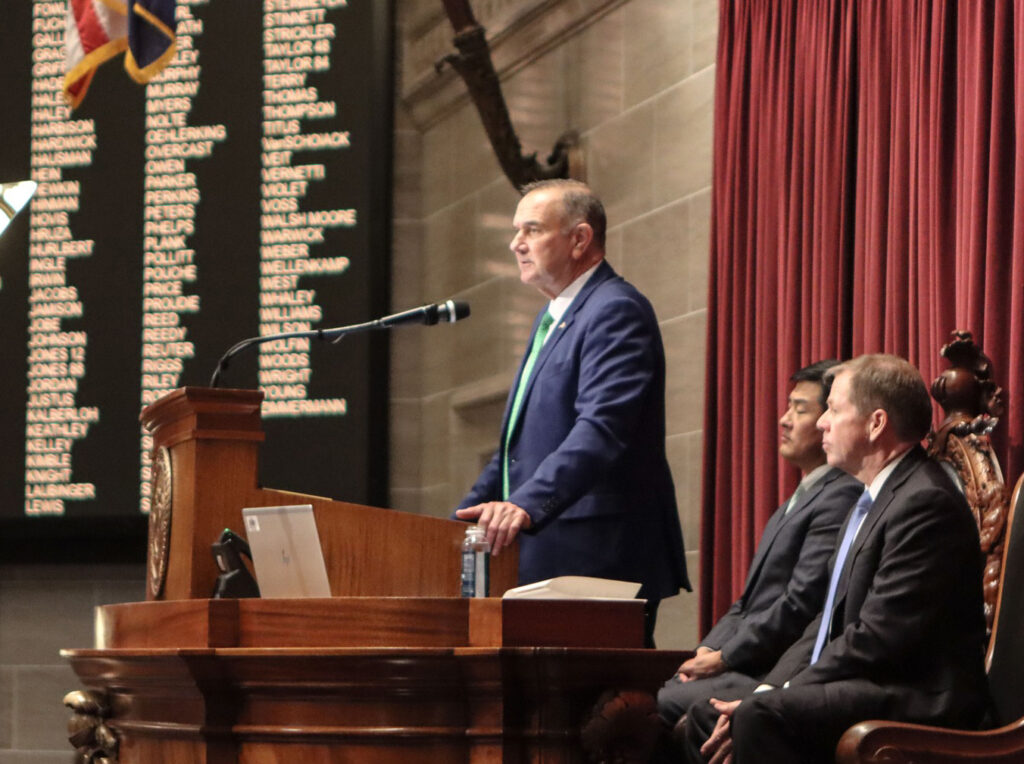
JEFFERSON CITY, Mo. — On January 13, 2026, Missouri Governor Mike Kehoe delivered his second State of the State address, marking one year since his inauguration. In a speech centered on themes of resilience, government efficiency, and long-term growth, Kehoe outlined a vision for Missouri’s future amid economic uncertainties. He emphasized fiscal responsibility through budget cuts, proposed a voter-approved phase-out of the state’s individual income tax, and highlighted initiatives in energy, public safety, agriculture, and education. While the address projected optimism, drawing parallels to Missouri’s historical role in American innovation, it also raised questions about the administration’s track record on spending and the potential impacts of these policies on rural communities, such as those in Chariton County, where agriculture remains the economic backbone.
As Missouri grapples with depleting surpluses and projected deficits, Kehoe’s proposals aim to balance conservative values with strategic investments. However, based on recent fiscal analyses and historical performance, critics argue that past expansions in state spending could undermine these efforts. For rural areas already facing challenges like declining farm incomes and healthcare access, the policies could exacerbate vulnerabilities, potentially leading to higher costs, service reductions, and community disruptions.
Key Elements of Governor Kehoe’s 2026 Address
Kehoe opened with personal reflections, thanking his wife Claudia for her “Mansion on a Mission” initiative and acknowledging his cabinet and staff’s dedication amid a challenging first year. He linked Missouri’s story to the nation’s upcoming 250th anniversary, citing the state’s contributions from westward expansion to modern military advancements. “Missouri has never sat on the sidelines of history,” Kehoe stated. “We helped write it and will continue to do so.”
For the full text and details of the address, visit the Governor’s Office website.
Government Efficiency and Executive Actions
A core focus was streamlining state operations. Kehoe announced executive orders, including one mandating cabinet members to engage stakeholders for at least eight hours monthly and another launching “Missouri Great,” a collaboration with business leaders to identify efficiencies and reduce waste. He stressed that “smaller government equals better government” by prioritizing core functions without excessive spending.
He also committed to nuclear energy expansion, signing an order for an Advanced Nuclear Energy Task Force and supporting updates to the renewable energy standard. Additionally, an AI-focused order aims to enhance government operations while positioning Missouri in emerging technologies.
Budget Proposal and Fiscal Priorities
Kehoe proposed a $54.5 billion budget for fiscal year 2027 (FY27), incorporating over $600 million in core spending cuts to address a projected $2 billion future imbalance. He criticized post-COVID spending growth, noting that since FY22, 3,400 new items have added nearly $13 billion in general revenue costs. The plan protects priorities like Medicaid matching, child care subsidies, disaster relief, and K-12 funding, which received a record increase last session equivalent to 10 years of prior boosts.
Midyear projections show FY26 general revenue declining 2.1% from the prior year, about $410 million less. Kehoe insisted on “pay-fors” for any spending reversals and vowed a balanced budget by June.
Tax Reform for Economic Competitiveness
Kehoe called for a ballot measure in 2026 to phase out Missouri’s individual income tax over five years, arguing it would enhance competitiveness against states like Tennessee and Texas. The plan includes taxing digital services (e.g., online ads, eBooks, AI platforms) for new local revenue, offset by property tax reductions, while exempting agriculture, healthcare, and real estate from sales tax expansions.
He praised last year’s capital gains tax elimination as a “game changer” for farmers and businesses, countering critics by asserting tax cuts empower Missourians.
Economic Development and Workforce Initiatives
Kehoe urged enhancements to the Missouri Works program for investments over $50 million and funding for Prosperity, a Kansas City nonprofit providing job training through pet grooming to combat poverty.
Public Safety and Family Values
The address highlighted “Safer Missouri” progress, including over 1,100 arrests via Operation Relentless Pursuit and $10 million more for Blue Shield grants. Kehoe called for juvenile crime reforms, sentencing transparency, drone regulations, and World Cup security funding.
On family issues, he endorsed Amendment 3 to restore pro-life laws and ban transgender procedures for minors, plus legislation expediting divorces for abused pregnant women.
Agriculture and Rural Support
Kehoe praised agriculture’s economic role amid 2025 challenges like floods and high costs. He noted SNAP waivers for local nutritious foods and $216 million in federal rural health funding. Ongoing support includes Missouri FFA programs.
Education Reforms
Kehoe expanded the MOST Scholars program to $60 million for school choice and budgeted $7.5 million for public school open enrollment. He signed an order for A-F school grade cards and maintained record K-12 funding.
The speech concluded with honors for 2025 disaster responders and a unity call.
Fiscal Promises Versus Historical Performance: Signs of Potential Irresponsibility
Kehoe’s emphasis on discipline—vowing balanced budgets and cuts—contrasts with the FY26 budget he signed at $50.8 billion, after vetoing $300 million in general revenue and restricting $211 million. While framed as curbing “unsustainable spending,” the budget remains high amid surplus depletion from $5.8 billion in FY23 to $4.3 billion in FY25, with projections showing only $4.7 million by June 2027.
For details on the FY26 budget signing, see the Governor’s Office press release.
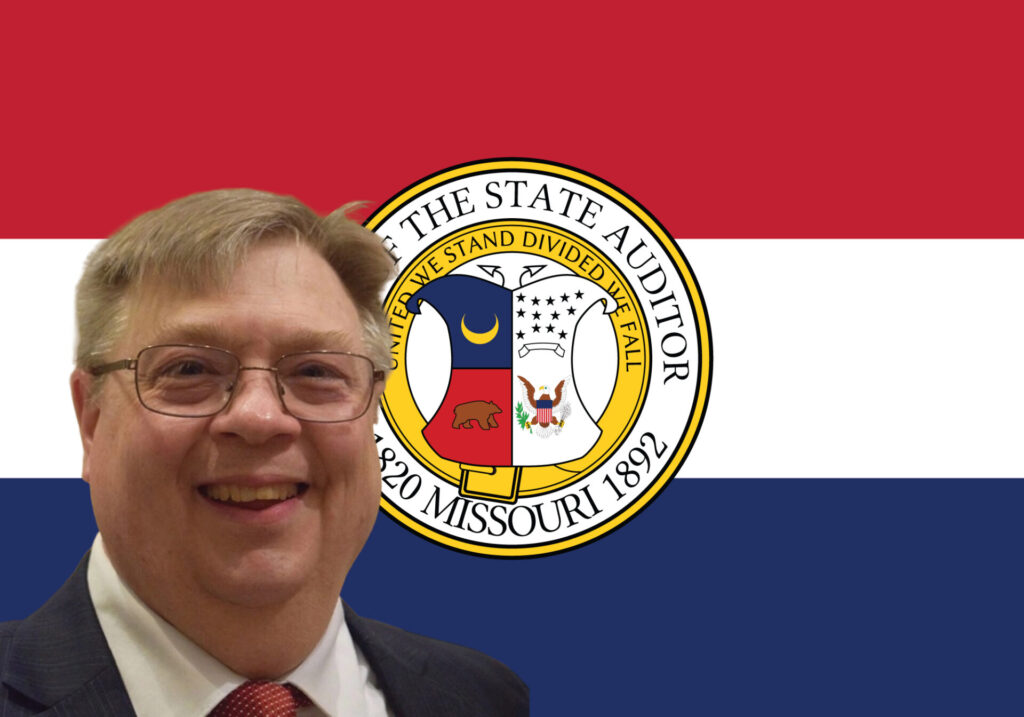
State Auditor Scott Fitzpatrick’s December 2025 report warns of deficit spending depleting general revenue by FY28 (or FY27 in a recession), with FY24 at $960 million, FY25 at $480 million, and FY26 over $2 billion. “The time is now to make the tough decisions,” Fitzpatrick stated. The full report is available here.
The 2025 capital gains tax elimination (HB594), initially estimated at $111 million annual loss, now projects $500 million in FY26 and $360 million ongoing, exceeding forecasts and contributing to shortfalls. It disproportionately benefits the wealthy, with average millionaires saving $43,000 versus $80 for others.
Medicaid expansion, protected in Kehoe’s budget, faces federal cuts under the One Big Beautiful Bill Act (H.R. 1), slashing $1.1 trillion nationally over 10 years, with Missouri losing $23 billion. This could result in 130,000-170,000 Missourians losing coverage, straining budgets.
These patterns suggest that if spending isn’t curtailed more aggressively, proposed cuts may not fully offset imbalances, potentially leading to deeper reductions in future years.
Potential Harms to Rural Missourians: A Focus on Chariton County
Rural Missouri, including Chariton County—a north-central area with about 7,000 residents reliant on soybeans, corn, and livestock—faces compounded risks from Kehoe’s proposals. Statewide net farm income dropped $697 million in 2024 and is projected to fall another $700 million in 2025 due to declining crop receipts and high costs. Chariton County’s population is expected to decrease 2% from 2020-2025, reflecting broader rural trends.
Healthcare Vulnerabilities Amid Medicaid Cuts
Federal Medicaid reductions under H.R. 1 could slash $23 billion from Missouri over a decade, with rural areas losing $137 billion nationally. In Missouri, 29 rural hospitals are at risk of closure (50% of total), including 12 at immediate risk. Since 2015, nine have closed, and over half of remaining rural facilities operate at a loss.
The $216 million federal rural health funding for FY26 offsets less than a third of losses, potentially leading to more closures if uncompensated care rises. In Chariton County, where residents already travel farther for care, this could mean higher premiums (up $1,000+ yearly) and job losses in healthcare.
Tax Shift’s Regressive Effects on Rural Households
The income tax phase-out could eliminate 65% of general revenue ($8.7 billion annually), requiring sales taxes to quadruple (state rate to 11.5%, total effective 17-19% with locals). This regressive shift would raise taxes for low- and middle-income rural families, prevalent in Chariton County, while benefiting the wealthy. Despite exemptions, everyday costs could increase, eroding tax savings amid stagnant growth. If revenue shortfalls occur, it could force cuts to rural services like roads and schools.
Energy Policies: Nuclear and Solar Risks
Kehoe’s nuclear push could impose high costs ($1,000/year per household) and risks like waste storage and chemical fires in rural areas with limited response capabilities. In Chariton County, potential expansions near existing sites like Callaway could threaten ag land.
Solar developments face rural opposition for displacing farmland, fire risks, and erosion. If guardrails are insufficient, it could lead to eminent domain disputes and loss of productive land in ag-heavy counties like Chariton County.
Education Reforms and Rural District Stability
Open enrollment could allow student transfers, but rural districts like those in Chariton County fear outflows to larger schools, leading to enrollment drops, funding losses, and potential closures. With half of rural Missouri districts on four-day weeks, consolidations could erode local control. Data from other states show mixed results, but Missouri’s local funding reliance amplifies risks.
Looking Ahead: Balancing Growth and Rural Realities
Kehoe’s address signals a push for transformation, but fiscal history and rural impacts warrant scrutiny. If deficits persist or federal cuts deepen, rural areas like Chariton County could face heightened challenges, potentially offsetting any growth benefits. As the General Assembly convenes, the response to these proposals will shape Missouri’s trajectory. For more on the address, visit the Governor’s Office website. For Auditor Fitzpatrick’s report, see auditor.mo.gov.